


Can You Sue an Assisted Living Facility for Negligence in California?
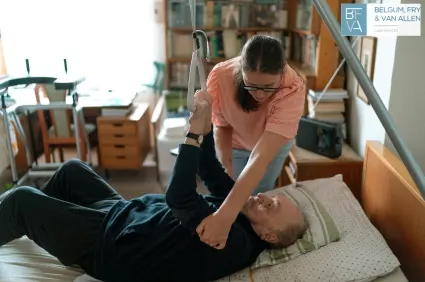
When a loved one starts living at an assisted living facility, you should be able to trust that they’ll be taken care of by the facility staff and medical team. When they fail at their professional duties, many wonder, “Can you sue an assisted living facility for negligence in California?” It’s important to hire an assisted living lawyer to understand the legal options available in your unique case.
Hire an Assisted Living Lawyer to Fight for Your Legal Rights
The attorneys at Belgum, Fry & Van Allen are passionate about protecting the legal rights of California’s most vulnerable communities. We take injustices personally and never back down from a difficult legal fight.
While we work to resolve client cases as quickly and efficiently as possible, we’ll take the responsible party to trial if needed. When you work with us, you’ll never be treated as just another case number.
Who You Can File Your Assisted Living Case Against
Unfortunately, elder abuse is common in the United States. In 2023, it was reported that around one in six elders over 60 years old experienced a form of abuse in a community setting. In California, there are over 7,800 licensed residential care facilities for the elderly, with over 210,000 residents. The state’s Adult Protective Services receives over 15,000 reports of elder abuse every month.
Knowing the steps to take after seeing your loved one be abused or neglected is key to their protection.
When filing your case, you can file against anyone involved in the abuse or neglect. This often includes multiple parties, such as:
- The nurses involved in your loved one’s care
- The staff at the facility
- Your loved one’s physical therapist and doctors
- The facility itself. This is often done to punish them for failing to uphold safety measures or for sweeping abuse under the rug.
Your attorney can evaluate your loved one’s situation and determine who can be filed against.
Deadlines to File Your Assisted Living Case
When pursuing a case against the staff or facility in charge of your loved one’s care, there are specific deadlines for filing. You must adhere to these deadlines or your case will likely be dismissed entirely, barring your loved one from any justice or compensation. These deadlines include:
- Three years for cases involving medical professionals and breaches of their medical duties. This can include cases where your loved one’s assigned nurse was overmedicating them on purpose or their physical therapist was forcing them to do treatment that injured them.
- Two years for non-medical cases
While these timelines may seem long, it’s vital to file as soon as possible. Evidence tends to fade fast in these types of cases, such as eyewitness memories fading and surveillance footage taping over itself. Acting quickly can help preserve evidence and ensure a successful outcome for your loved one’s case.
Types of Damages That Can Be Requested in Your Assisted Living Case
Damages are the amount of compensation being requested in an assisted living case. These damages are calculated based on the losses your loved one has suffered from the abuse or neglect, including financial and non-financial losses.
Your lawyer can help you understand what’s eligible in your loved one’s case and help pursue the maximum amount of compensation available. There are two main types of damages that can be requested in your case:
- Economic damages: These damages are easy to calculate, as they’re based on financial losses suffered. This can include compensation for your loved one’s medical bills and damage to their personal property.
- Non-economic damages: These damages are more subjective, as they’re based on non-financial losses. They can include compensation for your loved one’s pain and suffering, disfigurement, and inconvenience.
FAQs
Can I Pursue Punitive Damages in an Assisted Living Case?
A: You can pursue punitive damages in an assisted living case in situations where the responsible party acted with extreme malice, oppression, or fraud. When awarded, these damages allow victims to receive extra compensation. They’re designed as further punishment for the wrongdoer and are intended to deter similar actions in the future. Because assisted living cases are often about abuse, punitive damages are commonly sought.
Your lawyer can determine whether punitive damages can be requested in your loved one’s case.
What Are the Red Flags of Elder Abuse or Neglect?
The red flags of elder abuse or neglect can include seeing unexplained injuries on your loved one. They may also exhibit poor hygiene. They may have a sudden change in personality, becoming more withdrawn or sensitive. They may flinch when touched or seem afraid of specific staff members at the facility. If the facility refuses to let you see your loved one or makes it unnecessarily difficult to do so, they may be trying to hide misconduct.
What Four Things Are Needed to Prove Negligence in an Assisted Living Case?
The four things that are needed to prove negligence in an assisted living case start with showing that the responsible party had a duty to care for your loved one. You’ll then need to show that they failed at that duty. Next, you’ll have to prove that the failure directly led to your loved one’s injuries. Finally, you’ll need to show that your loved one’s injuries resulted in real harm, which can be financial and/or emotional.
What Evidence Is Needed to Prove Negligence in California?
Extensive evidence is needed to prove negligence in California. Courts rely on evidence to make their decisions, and if you only have one type, it’ll be difficult to prove your claim. Evidence can include testimony from witnesses of the abuse and professionals in similar fields. Surveillance footage and copies of your loved one’s medical records can provide clarity to the court. Include photos of any injuries or other proof of neglect and abuse.
Work With Experienced Legal Advocates in California
Reach out to Belgum, Fry & Van Allen today to learn how our attorneys can help you navigate your case. We offer confidential consultations at our office in Glendora, where you’ll be able to explain your situation in full detail. From there, our lawyers can offer transparent legal guidance, helping you make informed decisions regarding your case.


Address
1905 E Route 66, Suite 102
Glendora, CA 91740
FREE CASE EVALUATION(626) 914-9806
Quick Links
© Copyrights 2026 Belgum, Fry & Van Allen. All Rights Reserved.
Disclaimer | Site Map | Privacy Policy
Digital Marketing By 
*Images are obtained under license from Canva and other third-party stock image providers, with attribution included where required.